
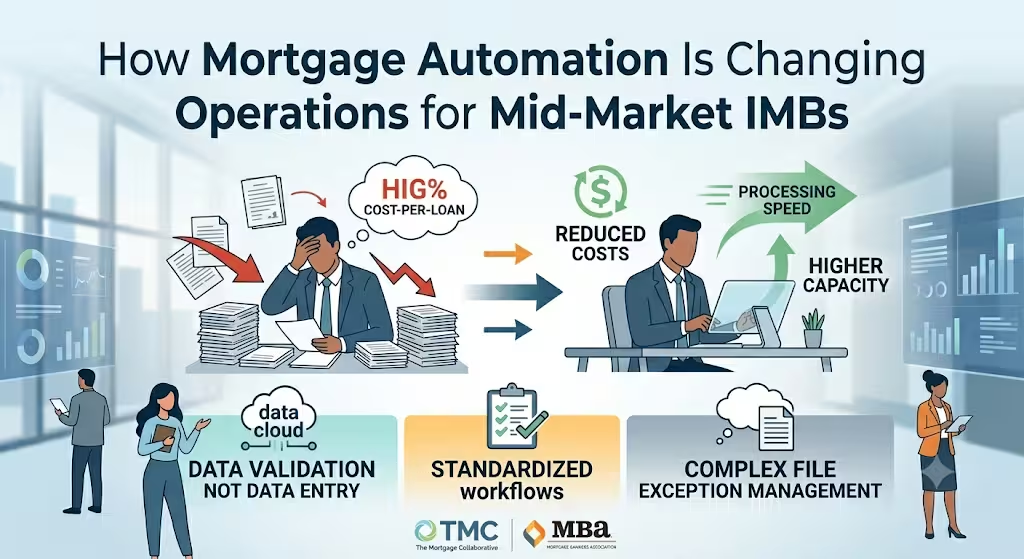
For mid-market Independent Mortgage Bankers (IMBs), the operational landscape of 2026 is defined by a single, relentless metric: cost-per-loan. As production costs remain a primary concern for the industry, the conversation has shifted from whether to automate to how to automate effectively without losing the “human touch” that defines the IMB sector.
For many, the promise of mortgage automation has felt like a moving target. However, practitioner-level insights from The Mortgage Collaborative (TMC) suggest that successful automation is less about replacing staff and more about enhancing their capacity to handle complex files.
The Efficiency Mandate: Why Automation Matters Now
The urgency behind automation is driven by historical data. According to reports from the Mortgage Bankers Association (MBA), production costs for IMBs have more than doubled over the last decade. For mid-market lenders—those without the massive economies of scale enjoyed by top-10 national firms—operational efficiency is the only sustainable path to reinvesting in growth.
3 Ways Automation is Transforming IMB Operations
1. Shifting from Data Entry to Data Validation
Traditionally, personnel costs have accounted for approximately 60% of total cost-per-loan. Automation is fundamentally changing this by removing the “stare and compare” tasks that bog down processors. Today’s mid-market IMBs use automated document recognition and income verification tools to ensure that by the time a file reaches a human, it is already “clean.” This allows your team to focus on high-value problem-solving rather than administrative manual entry.
2. Standardizing the “IMB Playbook”
A common pitfall identified in TMC peer working groups is automating a broken process. High-performing lenders are now using automation to enforce a standardized workflow. By mapping out every handoff and eliminating redundant review steps before deploying technology, IMBs ensure they are maximizing the ROI of their tech stack.
3. Enhancing the Member-Partner Relationship
In 2026, the most successful lenders treat their technology vendors as strategic partners rather than simple utility providers. Automation platforms that integrate deeply with a lender’s LOS (Loan Origination System) allow for real-time benchmarking and performance analytics. This strategic alignment, often vetted through networks like TMC’s Preferred Partner Marketplace, ensures that technology investments translate directly into reduced turn times.
Avoiding the “Automation Trap”
While the benefits are clear, mid-market IMBs must navigate the transition carefully. To achieve a meaningful reduction in cost-per-loan, consider these practitioner-tested strategies:
- Process Before Technology: Never automate a process that hasn’t been optimized for efficiency first.
- Benchmark Against Peers: Use data from platforms like TMC Insight to see how your operational throughput compares to similar-sized firms.
- Leverage Collective Knowledge: Engage with a peer network to vet automation vendors. Speed is a competitive advantage; knowing what works for other lenders can save months of trial and error.
The Path Forward
For the mid-market IMB, mortgage automation is no longer a luxury—it is the infrastructure of modern lending. By focusing on productivity and throughput rather than just contract negotiations, lenders can sustainably lower their costs while maintaining the high level of service their clients expect.
As a member-based cooperative, The Mortgage Collaborative is dedicated to helping independent lenders navigate these technological shifts through peer-to-peer knowledge sharing and a vetted marketplace of over 70 partners.
Are you looking to optimize your operational ROI? Learn more about TMC membership and how our working groups are solving today’s automation challenges.